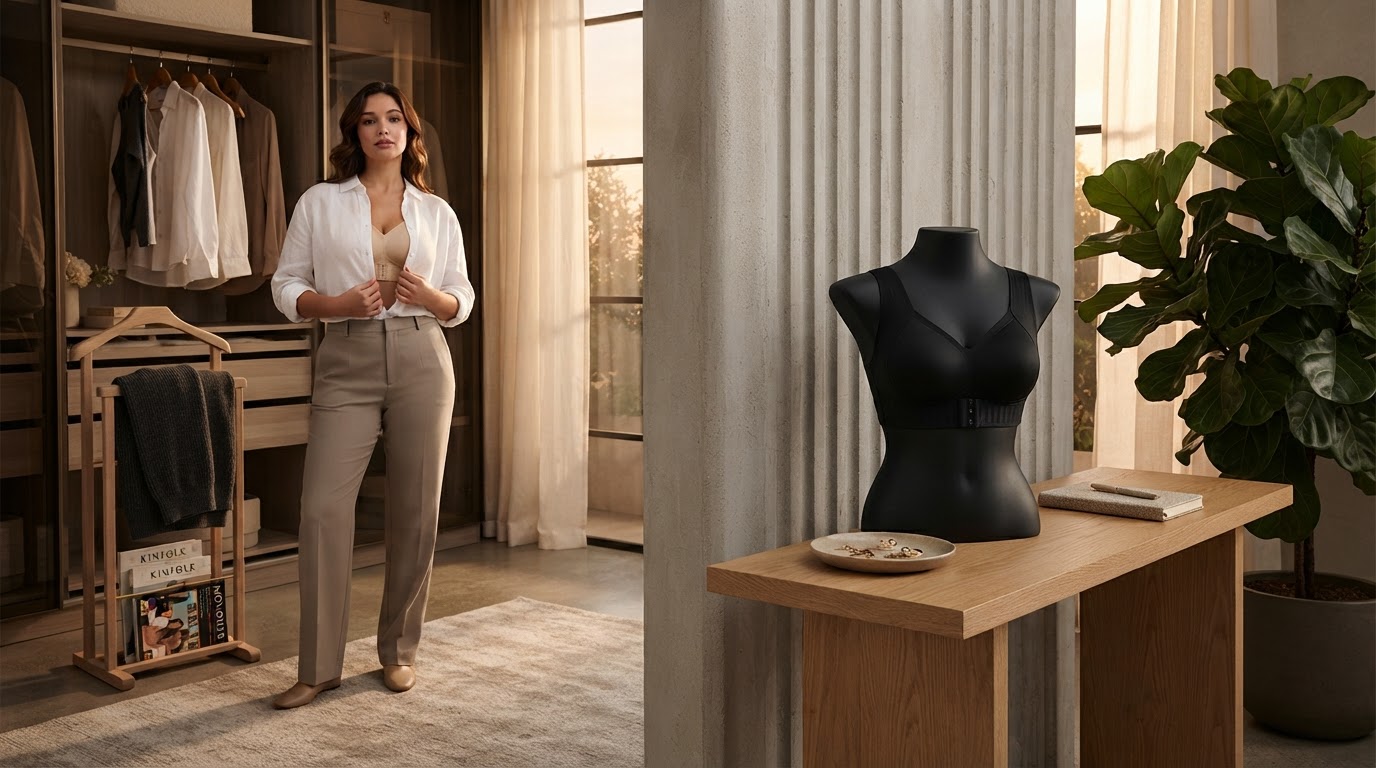
Postural Wireless Bra for Back Support and Alignment
 Sam VasquezBuying Guide Lead
September 8, 2026. Choosing a wire-free back support bra requires balancing compression with daily mobility to address chronic slouching and shoulder strain. This analysis evaluates the Postural Wireless Bra against industry standards for consumers seeking structural support without the restriction of traditional underwires.
The Physical Toll of Poor Upper Body Alignment
Maintaining spinal alignment becomes increasingly difficult during long hours of sedentary work or repetitive physical tasks. When the pectoral muscles tighten and the upper back muscles weaken, the result is often a rounded shoulder posture that leads to tension headaches and localized back pain. According to HerRoom, back support and posture bras are designed specifically to help individuals stand up straighter and appear taller by providing a physical cue to the thoracic spine. However, many traditional bras fail to provide this because they rely on narrow straps that dig into the trapezius muscles, exacerbating the very pain they are meant to solve. A common complaint in digital forums regarding back pain is that standard bras offer lift but no lateral or posterior stability. This lack of stability forces the wearer to consciously engage their core and back muscles just to stay upright, which leads to fatigue by mid-afternoon. If you are looking for a daily wear postural correction bra, the primary goal is finding a garment that automates this physical reminder. The market is currently split between high-compression medical binders and standard wireless bras that offer little more than fabric coverage. Finding the middle ground—a garment that provides genuine structural reinforcement while remaining soft enough for twelve-hour wear—is the core challenge for most buyers.
How Postural Wireless Bra Addresses Structural Support
The Postural Wireless Bra is engineered to bridge the gap between a standard wireless bra and a rigid medical brace. Unlike traditional designs that rely on a thin elastic band for support, this model utilizes a wide, reinforced back panel that distributes weight across the entire shoulder blade area rather than anchoring it solely on the tops of the shoulders. This design directly addresses the search for a wireless bra for lifted posture by using tensioned fabric zones to pull the shoulders back gently. In my experience looking at these designs, the lack of an underwire is not a weakness but a functional requirement for back health. Underwires can restrict the rib cage, leading to shallow breathing patterns that further contribute to muscle tension. By removing the wire, the Postural Wireless Bra allows for full diaphragmatic expansion while the X-shaped back reinforcement handles the heavy lifting of spinal alignment. When comparing this to something like the Exquisite Form Fully Front Close Wire-free Cotton Posture Bra mentioned by Curvybras, which emphasizes cotton comfort and a front-close mechanism, the Postural Wireless Bra focuses more heavily on the elasticity and recovery of the back panel to maintain its shape over time. If you prefer the ease of entry provided by a [front closure posture bra](/blog/front-closure-posture-bra), you will find that the Postural Wireless Bra follows a similar philosophy of accessibility. The integration of wide, padded straps ensures that the weight of the bust does not create the deep grooves in the shoulders often associated with heavy-duty support garments. It is a practical solution for those who have tried standard sports bras and found them too compressing or difficult to put on and take off.
Choosing the Right Support Level for Your Needs
When you are deciding between different support options, the choice usually comes down to the duration of wear and the severity of your postural habits. Between these two—a standard wireless bra and a dedicated posture corrector—I’d go with a hybrid model like the Postural Wireless Bra because it doesn't require a wardrobe change to get through a workday. If you're on a budget, you might be tempted by basic cotton leisure bras, but these rarely have the tensile strength to pull the shoulders back effectively. Skip this if you already have perfect spinal alignment and are just looking for a lounge bra; the tension in the back panel will likely feel unnecessary for someone without slouching issues. To ensure you are getting the correct level of support, use this framework before purchasing:
- Check the width of the back band: It should be at least three to four inches wide to prevent rolling and to distribute pressure effectively.
- Verify the closure type: Front closures are generally better for those with limited shoulder mobility or existing back pain.
- Assess the strap design: Look for non-stretch or low-stretch padded straps to prevent the 'bounce' that leads to neck strain.
- Evaluate fabric breathability: Since posture bras cover more skin surface area, moisture-wicking properties are essential for all-day comfort.
- Look for reinforced 'X' stitching: This specific pattern is the industry standard for directing tension across the upper back to pull shoulders into a neutral position.
Shop Postural Wireless Bra here
Sources