Causes of Upper Back Pain in Women: Causes, Prevention, and Daily Relief
Upper back discomfort is a prevalent issue that affects up to 80% of women at some point in their lives. The upper back, or thoracic spine, plays a central role in maintaining posture, stabilizing movement, and supporting daily physical activities. When muscle tension or spinal misalignment occurs in this area, it can severely hinder mobility and quality of life.
Understanding Upper Back Pain in Women
Thoracic pain often stems from muscle strain, ligament sprains, or poor mechanical alignment. Women frequently experience unique pressures across the shoulders and upper spine due to factors such as chest weight distribution, improper apparel fit, repetitive daily movements, and desk-bound routines.
Common Causes of Upper Back Pain in Women
Several factors contribute to upper thoracic strain in women:
Ergonomic Factors and Workspace Setup
Optimizing your environment is essential for relieving spinal pressure. To ensure an posture-friendly workstation setup:
- Position your desk height at 72-75 cm from the floor.
- Keep your monitor distance between 20-30 inches away from your eyes.
- Maintain an elbow angle of 90-100 degrees while typing or writing.
The Role of Apparel and Support
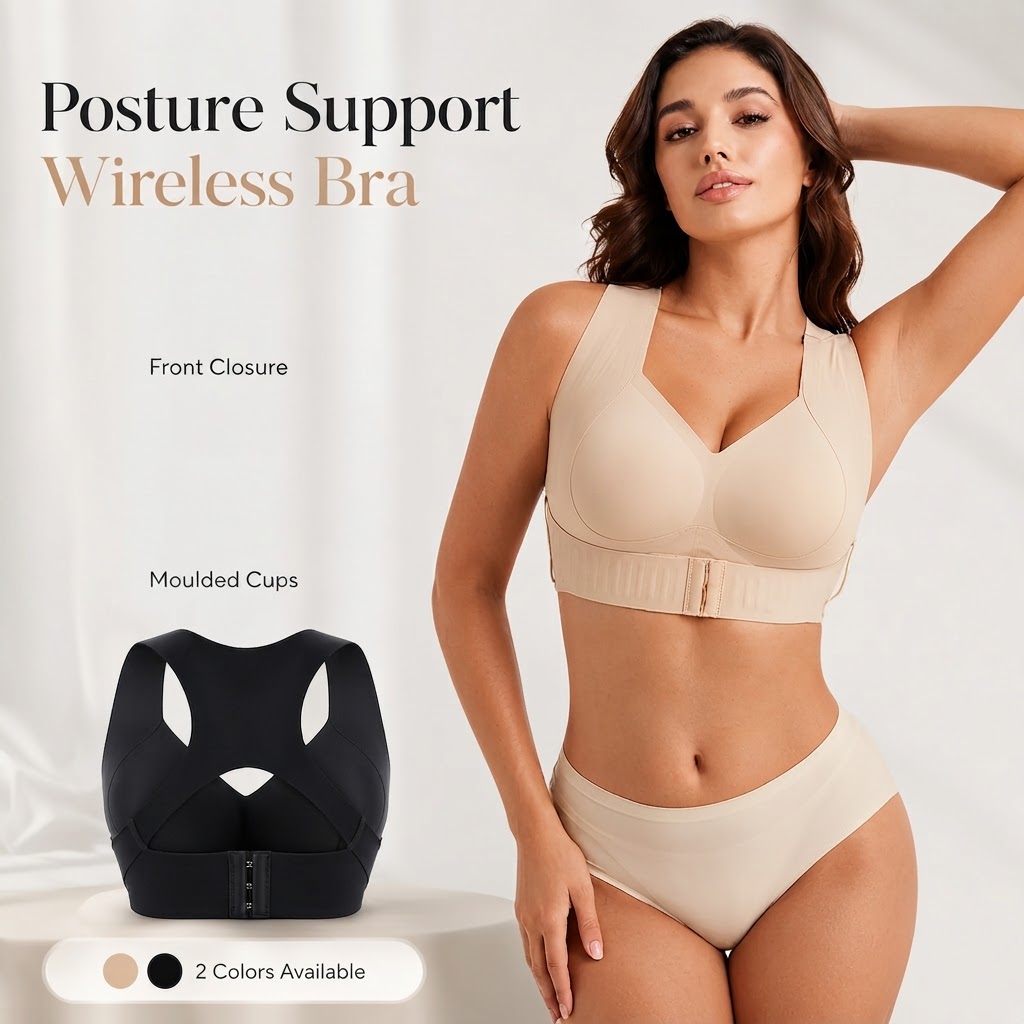
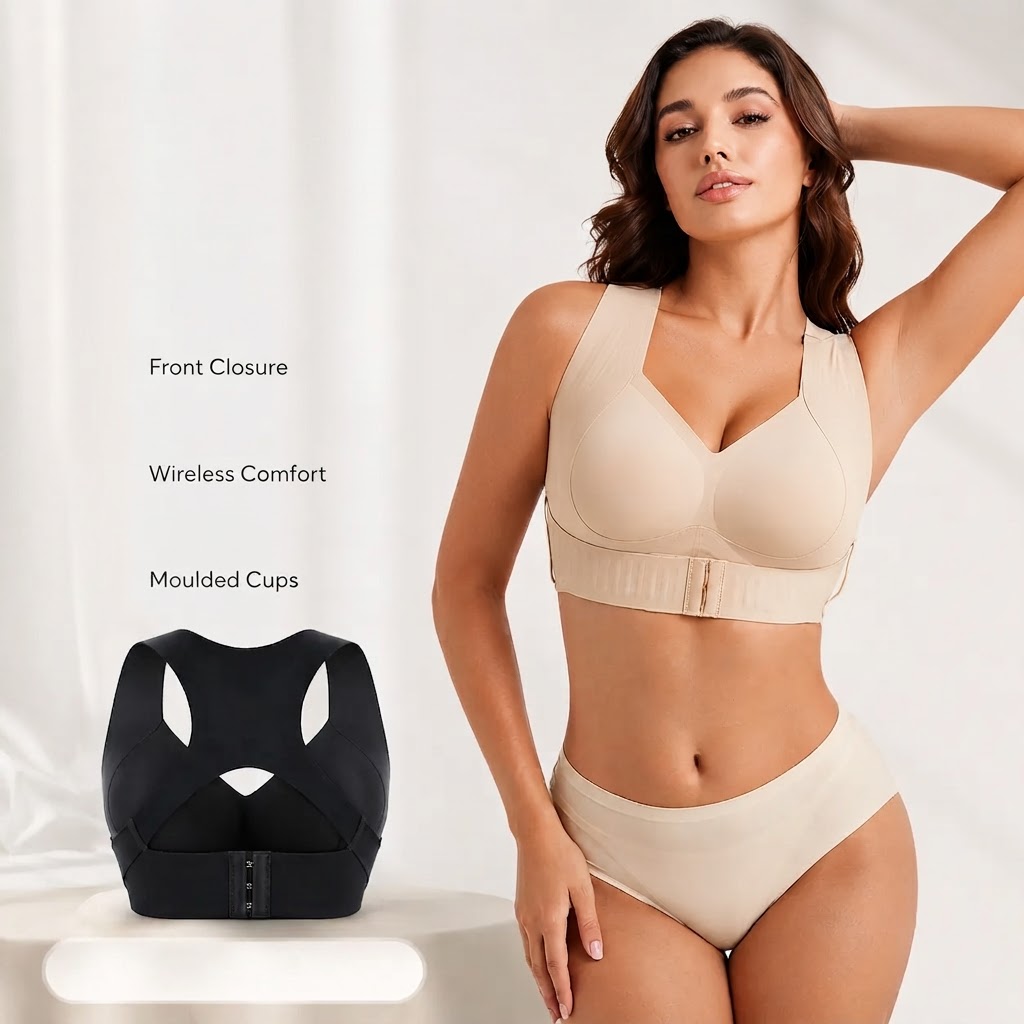
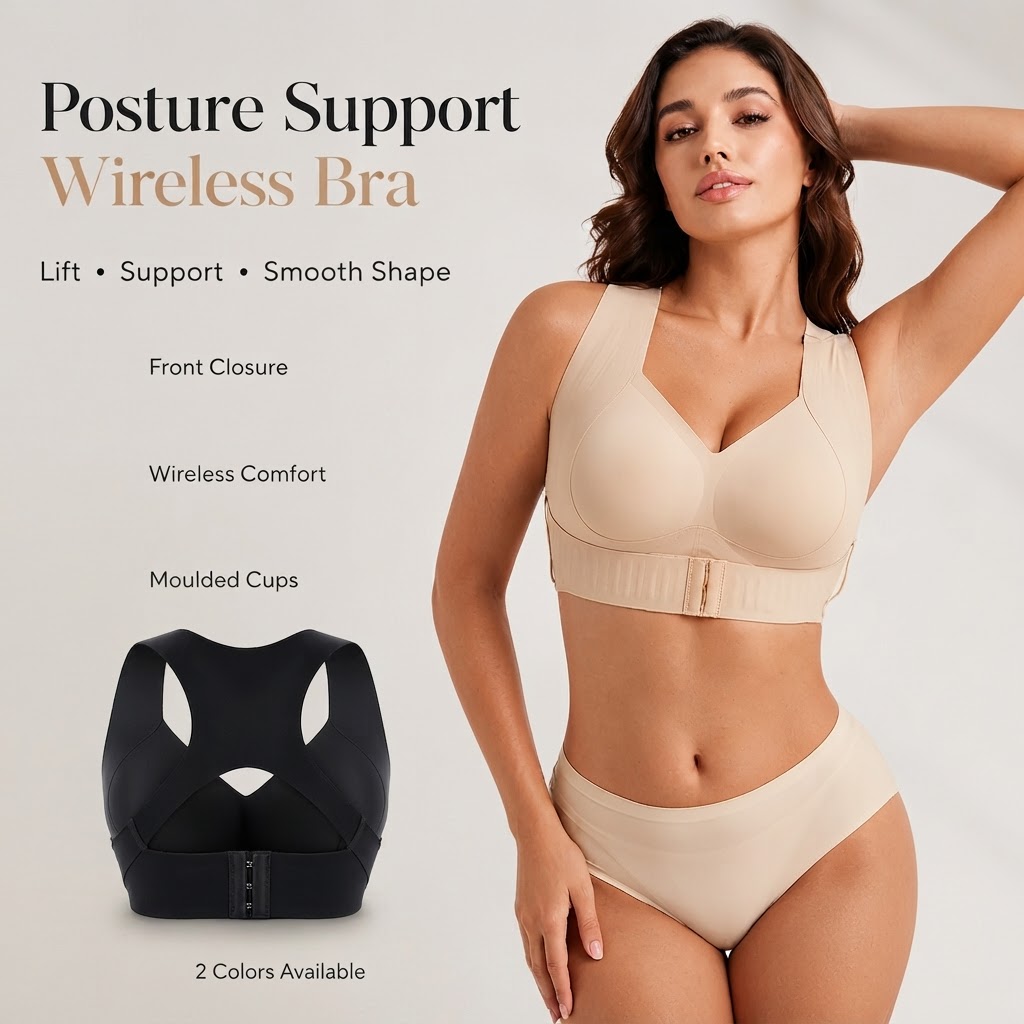
Everyday garments play a vital role in postural alignment. Choosing ergonomic garments engineered with a postural correction design helps distribute upper body weight evenly across the back. Products like the Postural Wireless Bra provide gentle posture feedback and structure without reliance on harsh underwire, reducing pressure points around the ribcage.
Active Relief and Daily Stretching Routines
Incorporating simple daily physical exercises can release accumulated muscle tightness:
- Chin Tucks: Hold for 5-10 seconds to align the cervical and upper thoracic spine.
- Scapular Squeezes: Pull shoulder blades together for 5-10 seconds, repeating 10-15 times per session.
- Upper Back Stretches: Hold gentle thoracic extension stretches for 15-30 seconds.
Lifestyle Modifications and Long-Term Prevention
Long-term relief requires a holistic approach. Staying active with low-impact workouts such as yoga and fitness training strengthens stabilizer muscles. Additionally, choosing soft and breathable material for daily activewear, maintaining maximum garment washing temperatures of 30°C to preserve elasticity, and prioritizing proper resting posture ensure lasting comfort and thoracic support.
Related in this cluster
- How Poor Posture Triggers Upper Back Discomfort in Women
- How to Relieve Upper Back Strain at Home with Easy Stretches
- Choosing Support: How Bra Choice Impacts Upper Back Tension
- Postural Wireless Bra vs Underwire Bra for Upper Back Comfort
- Key Features of the Postural Wireless Bra for Daily Comfort
- Upper Back Pain in Women: Frequently Asked Questions